Marrakech to Casablanca Transfer: Your Complete Guide to Taxis, Private Drivers & Transport Options (2025)
Planning to travel between Morocco’s enchanting red city and its bustling economic capital? You’re about to embark on one of the country’s most frequently traveled routes. Whether you’re catching a flight at Mohammed V International Airport, exploring Casablanca’s Art Deco architecture, or simply transitioning between these two iconic destinations, understanding your transportation options can make or break your Moroccan adventure.
This comprehensive guide explores every possible way to travel from Marrakech to Casablanca, from budget-friendly shared taxis to luxurious private transfers. You’ll discover insider pricing details, booking strategies, safety considerations, and professional tips that most travel guides overlook. By the time you finish reading, you’ll know exactly which transport option suits your budget, schedule, and comfort preferences—and how to book it confidently.
The 240-kilometer journey connecting these cities offers travelers a fascinating cross-section of Morocco’s diverse landscape, from the Atlas Mountain foothills to the coastal plains of the Atlantic. Let’s dive into everything you need to know about making this journey smoothly, safely, and affordably.
Complete Overview of Marrakech to Casablanca Transportation Options
Before we explore each option in detail, it’s essential to understand the complete landscape of available transportation between these two cities. The variety might surprise you—there’s truly an option for every type of traveler, from shoestring backpackers to luxury-seeking executives.
Quick Comparison of All Transport Methods
To help you make an informed decision quickly, here’s a comprehensive comparison table of every transportation option available for the Marrakech to Casablanca route:
| Transportation Type | Cost Range (MAD) | Cost (USD/EUR) | Duration | Comfort Level | Convenience | Best For |
|---|---|---|---|---|---|---|
| Shared Grand Taxi (per seat) | 80-120 | $8-12 / €7-11 | 3-4 hours | ⭐⭐ | ⭐⭐ | Extreme budget travelers |
| CTM Bus | 80-110 | $8-11 / €7-10 | 3.5-4 hours | ⭐⭐⭐ | ⭐⭐⭐ | Budget-conscious solo travelers |
| Private Grand Taxi (whole car) | 500-700 | $50-70 / €45-65 | 2.5-3 hours | ⭐⭐⭐ | ⭐⭐⭐⭐ | Small groups on budget |
| Shared Minivan | 150-250 | $15-25 / €14-23 | 3-3.5 hours | ⭐⭐⭐ | ⭐⭐⭐ | Mid-budget travelers |
| Air-Conditioned Taxi | 600-800 | $60-80 / €55-75 | 2.5-3 hours | ⭐⭐⭐⭐ | ⭐⭐⭐⭐ | Comfort-focused travelers |
| Private Transfer – Economy Car | 700-1000 | $70-100 / €65-90 | 2.5-3 hours | ⭐⭐⭐⭐ | ⭐⭐⭐⭐⭐ | Couples, small families |
| Private Transfer – Minivan | 900-1400 | $90-140 / €85-130 | 2.5-3 hours | ⭐⭐⭐⭐ | ⭐⭐⭐⭐⭐ | Families, groups of 4-7 |
| Private Transfer – 4×4 | 1200-1800 | $120-180 / €110-165 | 2.5-3 hours | ⭐⭐⭐⭐⭐ | ⭐⭐⭐⭐⭐ | Luxury seekers, comfort priority |
| Private Transfer – Luxury Car | 1500-2500+ | $150-250+ / €140-230+ | 2.5-3 hours | ⭐⭐⭐⭐⭐ | ⭐⭐⭐⭐⭐ | VIP/business executives |
| Train (ONCF) | 110-180 | $11-18 / €10-17 | 3 hours | ⭐⭐⭐⭐ | ⭐⭐⭐ | Solo travelers with light luggage |
Which Transport Option is Right for You?
Choosing the right transportation method depends on several key factors beyond just price. Let me break down the ideal scenarios for different traveler profiles:
For Budget Travelers (Under $15 per person): If you’re traveling solo and want the absolute cheapest option, the CTM bus or a seat in a shared grand taxi will serve you well. The CTM bus offers the best balance of comfort and price at this level, with air conditioning, reserved seating, and a predictable schedule. You’ll sacrifice the door-to-door convenience of private options, but you’ll save substantially.
For Families with Children: A private minivan transfer becomes the clear winner when traveling with kids. The ability to stop when needed, store strollers and equipment, install car seats, and avoid the stress of navigating public terminals with tired children makes the extra investment worthwhile. When you calculate the per-person cost for a family of four or five, it often works out quite reasonably—sometimes just $20-30 per person.
For Luxury Seekers and Business Travelers: Nothing beats a private 4×4 or luxury sedan transfer. You’ll enjoy superior comfort, professional chauffeur service, guaranteed air conditioning, and the flexibility to work during the journey or take business calls. Many executive travelers book these for the Marrakech to Casablanca airport route to ensure they arrive refreshed and on time for international flights.
For Solo Travelers with Moderate Budgets: Consider an air-conditioned private taxi or joining a shared minivan service. These options provide a middle ground between cramped buses and expensive private cars. You get decent comfort without breaking the bank.
For Groups of 3-6 People: A private transfer becomes incredibly cost-effective. Split between several people, even a comfortable 4×4 or minivan costs less per person than individual bus tickets, while providing exponentially more convenience and comfort.
For Tight Flight Connections: When you’re catching an international flight from Casablanca airport or need to make specific connections, only a private transfer gives you the scheduling precision and door-to-door reliability you need. The price difference becomes negligible when you consider the cost of missing a flight.
For Cultural Experience Seekers: The shared grand taxi system, while not the most comfortable, offers an authentic glimpse into Moroccan daily life. You’ll share the journey with locals, possibly practice your French or Arabic, and experience how millions of Moroccans travel regularly.
Private Transfer Services Marrakech to Casablanca (Premium Option)
When most international travelers search for « Marrakech to Casablanca private transfer », they’re looking for the perfect balance of comfort, convenience, and reliability. Let me walk you through everything you need to know about this premium transportation option.
What is a Private Transfer Service?
A private transfer means you’re booking a vehicle exclusively for yourself and your travel companions. Unlike buses, trains, or shared taxis where you’re one passenger among many, a private transfer gives you complete control over your journey. Here’s what defines this service:
Exclusive Vehicle Use: The car, minivan, or 4×4 is yours alone for the entire journey. No strangers sharing your space, no multiple pickups, no waiting for other passengers to board.
Professional Driver Included: Every private transfer comes with a licensed, professional driver who handles all the navigation, driving stress, and logistics. Most drivers speak at least basic English along with Arabic and French, though language abilities vary by company.
Door-to-Door Convenience: This is perhaps the biggest advantage. Your driver picks you up directly from your hotel, riad, or private address in Marrakech—even in the labyrinthine medina where cars can’t enter, drivers coordinate a nearby meeting point. They deliver you precisely to your destination in Casablanca, whether that’s a hotel entrance, an apartment building, or directly to your terminal at Casablanca airport.
Pre-Booked Reliability: Unlike trying to hail a taxi or show up at a bus station hoping for availability, your private transfer is confirmed in advance. You receive booking confirmation, driver details, and vehicle information typically 24 hours before your journey.
Fixed Pricing Transparency: The price you see when booking is usually the price you pay. No haggling, no unexpected « extra fees, » no meter anxieties. This predictability is especially valuable for visitors unfamiliar with Moroccan transportation norms.
Types of Private Transfer Vehicles Available
The beauty of booking a Marrakech to Casablanca private transfer is the variety of vehicle options available. Let me break down each category so you can choose what fits your needs.
Standard Cars & Sedans
These represent the economy tier of private transfers—affordable but still maintaining professional standards. You’ll typically encounter models like the Dacia Logan (popular in Morocco), Peugeot 301, or similar four-door sedans. These vehicles comfortably seat 1-3 passengers with reasonable luggage capacity.
The trunk space accommodates two large suitcases and 1-2 carry-ons, making them ideal for couples or solo travelers with standard luggage. If you’re traveling light for business or a quick weekend trip, these cars provide everything you need without paying for space you won’t use.
Best for: Solo business travelers, couples, travelers with minimal luggage, budget-conscious visitors who still want private service
Average price range: 700-1000 MAD ($70-100 USD / €65-90 EUR) for the complete journey
All modern sedan transfers include air conditioning (essential during Morocco’s hot summers), clean interiors, and working seatbelts. Don’t expect luxury amenities like WiFi or bottled water as standard at this price point, though some companies include them as nice touches.
Minivans & People Carriers
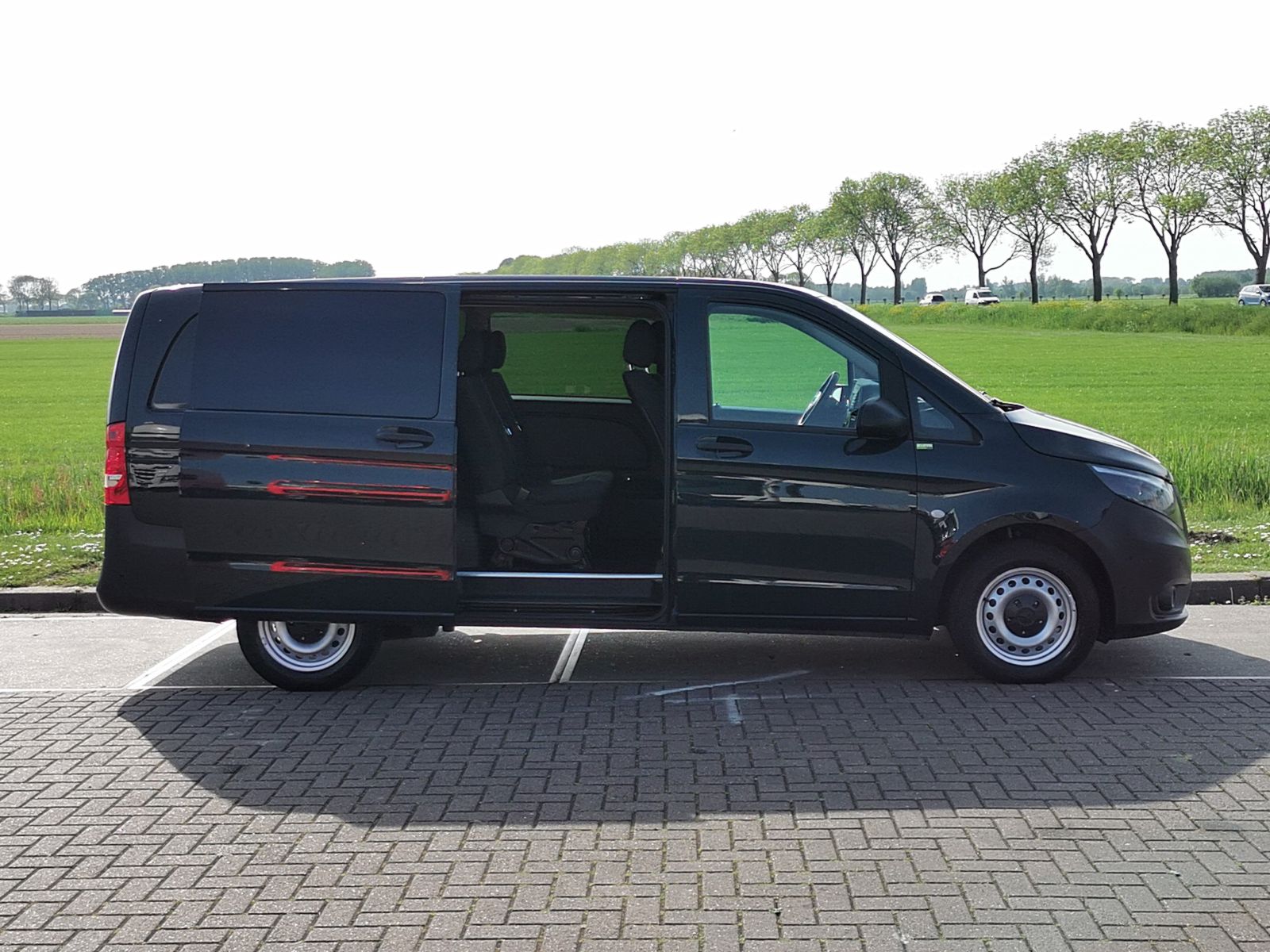
When you’re traveling with family, friends, or simply have substantial luggage, minivans become the obvious choice. The most common models are Mercedes Vito, Volkswagen Transporter, Hyundai H1, and similar commercial people carriers configured for passenger comfort.
6-7 passenger minivans represent the standard configuration. These vehicles feature three rows of seating, with the third row often being slightly less spacious. Luggage capacity is generous—easily handling 4-5 large suitcases plus several carry-ons, with some space remaining.
8-passenger options exist but are less common. These larger Mercedes Sprinter-style vans work perfectly for bigger groups or families traveling with extensive equipment (think multiple strollers, sports gear, or photography equipment).
The real value proposition emerges when you calculate per-person costs. A minivan costing 1200 MAD split among six travelers equals just 200 MAD per person—cheaper than many bus tickets while providing infinitely more convenience. This makes minivans the best-value option for families and groups.
Best for: Families with children, groups of 4-7 friends, travelers with multiple large suitcases, those carrying special equipment (golf clubs, diving gear, baby equipment)
Average price range:
- 6-7 passenger minivans: 900-1400 MAD ($90-140 USD / €85-130 EUR)
- 8+ passenger vehicles: 1200-1600 MAD ($120-160 USD / €110-150 EUR)
Modern minivans include air conditioning throughout all rows (check this when booking, as older models sometimes have weak AC in rear seats), ample legroom in the first two rows, and usually reclining seats for added comfort during the 2.5-3 hour journey.
4×4 & SUV Options
Here’s where private transfers shift into the premium comfort category. Popular models include Toyota Land Cruiser Prado, Mitsubishi Pajero, Nissan Patrol, and similar robust SUVs. These aren’t necessary for the highway journey itself—the A7 motorway to Casablanca is perfectly smooth—but they offer superior comfort and a commanding road position.
The advantages of 4×4 vehicles for the Marrakech to Casablanca route include:
- Smoother ride quality: Better suspension systems absorb highway imperfections
- Higher seating position: Improved views of the passing Moroccan landscape
- Enhanced safety features: Modern SUVs come with advanced stability systems
- Perceived prestige: Arriving in a Land Cruiser makes a different impression than a sedan
- More interior space: Greater shoulder room and legroom for all passengers
- Better for elderly passengers: Higher seats make entry and exit easier than low sedans
Seating capacity typically ranges from 5-7 passengers depending on configuration. Luggage space is comparable to minivans but with the added benefit that roof racks are common, allowing for truly exceptional cargo capacity when needed.
Many travelers choosing 4x4s are combining their transfer with other elements of a Morocco itinerary—perhaps they’ve just completed an Atlas Mountains trek or are continuing to a desert tour afterward. The 4×4 becomes part of a multi-day adventure rather than just a simple transfer.
Best for: Comfort-focused travelers, elderly passengers or those with mobility considerations, travelers combining transfers with adventure tourism, groups wanting premium comfort, photography enthusiasts who appreciate the higher viewpoint
Average price range: 1200-1800 MAD ($120-180 USD / €110-165 EUR)
Luxury & VIP Vehicles
At the top tier, luxury private transfers feature vehicles like Mercedes S-Class, BMW 7 Series, Audi A8, and similar executive sedans. These are genuine chauffeur servicesrather than simple transfers.
What distinguishes luxury transfers:
- Premium vehicle models: Latest-generation luxury sedans with all amenities
- Highly experienced drivers: Often English-fluent, exceptionally professional, trained in executive service
- Superior amenities: Complimentary WiFi, bottled water, phone chargers, reading materials
- Immaculate condition: Showroom-quality vehicle cleanliness and maintenance
- Flexibility: Drivers accommodate last-minute changes more gracefully
- Discretion and professionalism: Appropriate for high-profile travelers or sensitive business situations
Seating capacity maxes out at 2-3 passengers (these are sedans prioritizing comfort over capacity). Luggage space is adequate for business travel but not ideal for families with extensive baggage.
Best for: Business executives, VIP travelers, luxury-focused tourists, travelers wanting to impress, those who simply prefer the finest available service
Average price range: 1500-2500+ MAD ($150-250+ USD / €140-230+ EUR)
Corporate accounts often negotiate monthly rates or package deals for regular Marrakech-Casablanca transfers, bringing costs down for frequent travelers.
Private Transfer Pricing Structure
Understanding how private transfer pricing works helps you budget accurately and avoid surprises. Unlike metered taxis where costs can vary unpredictably, private transfers operate on transparent, fixed-rate structures.
What’s Included in Standard Prices
When you see a quoted price for a Marrakech to Casablanca private transfer, here’s what should be included:
✅ Professional driver service for the entire journey ✅ All fuel costs (no fuel surcharges or pump stops) ✅ Highway toll fees (the A7 motorway has approximately 40-50 MAD in tolls) ✅ Basic vehicle insurance (third-party liability minimum) ✅ Meet & greet service (driver contacts you and meets at agreed location) ✅ Luggage handling assistance (driver helps load and unload) ✅ Reasonable waiting time (typically 15-30 minutes included if you’re delayed) ✅ Air conditioning throughout the journey ✅ One standard route (Marrakech to Casablanca via the direct A7 highway)
What’s typically NOT included unless specified:
❌ Child car seats (usually 50-100 MAD extra per seat) ❌ Additional stops along the route (30-100 MAD per stop) ❌ Extended waiting time beyond the included buffer ❌ Detours to cities like El Jadida or Azemmour ❌ Return journey (unless booked as round-trip package) ❌ Driver’s meals (if journey extends to meal times with stops) ❌ Tips/gratuities for the driver
Finding Low-Cost Private Transfer Options
« Low-cost » is relative when discussing private transfers, but there are legitimate ways to secure better prices without sacrificing quality or safety:
1. Book Directly with Local Companies: Bypass international booking platforms that add 20-30% commission. Search for « Marrakech private transfer companies » and contact them via WhatsApp (very common in Morocco) or email. Local operators like Marrakech Transfer Services, Morocco Private Tours, and numerous reputable agencies offer direct booking.
2. Compare Multiple Quotes: Get at least 3-5 quotes from different providers. Prices can vary by 30-40% for identical services. Use comparison sites as a starting point, then contact promising companies directly.
3. Book Round-Trip Packages: If you need both Marrakech to Casablanca and the return journey, booking both simultaneously typically saves 10-20% compared to two one-way trips. Companies prefer guaranteed business both ways.
4. Travel Off-Peak: The highest demand (and prices) occur during Morocco’s peak tourist seasons (March-May and September-November). If you’re traveling in the hot summer months (June-August) or winter (December-February), you’ll find better rates and more negotiating room.
5. Book in Advance but Not Too Far: The sweet spot is typically 3-7 days before travel. Last-minute bookings (same day or next day) carry premium pricing, but booking months in advance doesn’t usually provide discounts with private transfer companies.
6. Leverage Your Accommodation: Many riads and hotels in Marrakech have partnerships with reliable transfer companies. Ask your accommodation for recommendations—they often secure better rates through volume relationships than you’d find independently.
7. Group Travel: If you’re traveling with friends but booking separately, combine into one larger vehicle. Six people splitting a minivan pay less per person than three couples each booking separate sedans.
Here’s a realistic price comparison for different booking methods:
| Booking Method | Economy Sedan | Minivan (6-7 pax) | 4×4 SUV |
|---|---|---|---|
| International Platform (GetYourGuide, Viator) | 1100-1300 MAD | 1400-1700 MAD | 1900-2300 MAD |
| Local Company Website | 900-1100 MAD | 1200-1500 MAD | 1600-1900 MAD |
| Direct WhatsApp Contact | 750-950 MAD | 1000-1350 MAD | 1400-1750 MAD |
| Hotel Concierge Arrangement | 850-1100 MAD | 1150-1450 MAD | 1500-1850 MAD |
Additional Costs to Anticipate
Even with fixed-rate pricing, certain situations trigger additional charges. Knowing these upfront prevents awkward conversations with your driver:
Extra Stops: Want to visit an argan oil cooperative or stop at a roadside cafe? Most drivers charge 50-100 MAD per stop that deviates from the direct route. Some are generous with brief photo stops, but extended visits always cost extra.
Extended Waiting Time: If you’re running more than 30 minutes late for pickup, expect waiting charges of approximately 100-150 MAD per hour. For airport pickups where flight delays occur, most companies monitor flight arrivals and provide reasonable grace periods.
Child Car Seats: Infant car seats, toddler seats, and booster seats typically cost 50-100 MAD each as an add-on. Always request these when booking—bringing them to the vehicle last-minute sometimes isn’t possible.
Late Night/Early Morning Premiums: Some companies charge 10-20% extra for pickups between 10 PM and 6 AM. Not all do this, so ask specifically when your departure time falls in this window.
Airport Pickup Fees: While less common now, some services add a small airport access fee of 50-100 MAD for picking up from terminals. This compensates for parking fees and navigation through airport traffic zones.
Return Trip Coordination: If you book one-way initially then want to add the return journey later, you’ll pay full price for each direction. Book them together for package savings of 10-20%.
Booking Your Private Transfer
Let me walk you through the practical process of booking your Marrakech to Casablanca private transfer, from research through confirmation.
Where to Book Private Transfers
Online Booking Platforms: International sites like GetYourGuide, Viator, and TripAdvisor Experiences offer the easiest booking interfaces for English speakers, with clear cancellation policies and customer protection. You’ll pay a premium (typically 15-30% more than direct bookings) for this convenience and security.
Direct Company Websites: Search for established Moroccan transfer companies with professional websites and strong review histories. Look for names like Morocco Excursions, Best Morocco Tours, Marrakech Private Transfer, and similar services with substantial online presence. These typically offer better prices than aggregator platforms.
WhatsApp Booking: This is incredibly popular in Morocco and often the cheapest method. Once you identify a reputable company (through reviews, hotel recommendations, or travel forums), contact them via WhatsApp. You’ll receive quotes, negotiate if appropriate, and confirm bookings entirely through the messaging app. It feels informal but is standard practice.
Hotel/Riad Concierge: Your accommodation almost certainly has transfer partnerships. The advantages include accountability (your hotel vouches for the service), convenience (no research required), and often decent pricing due to volume relationships. The disadvantage is less price comparison.
Airport Transfer Desks: Both Marrakech Menara and Casablanca Mohammed V airports have official transfer desks, but these are typically the most expensive option and best reserved for emergencies when you haven’t pre-booked.
Step-by-Step Booking Process
- Choose Your Vehicle Type: Based on passenger count and luggage requirements, select sedan, minivan, 4×4, or luxury vehicle.
- Enter Precise Pickup Location: Provide your exact hotel name, riad address, or if in Marrakech’s medina (where cars can’t enter), the nearest accessible point. For airport pickups, specify terminal and arrival time.
- Specify Your Destination: Hotel name and address in Casablanca, or specific terminal at Mohammed V International Airport (there are two terminals—Terminal 1 for most international flights, Terminal 2 for some regional/domestic flights).
- Select Date and Time: Be realistic about timing. If leaving from a medina riad, add 10-15 minutes for walking to the car meeting point. If heading to Casablanca airport, plan to arrive 3 hours before international flights, 2 hours before domestic.
- Add Passenger Count and Special Requests: Include exact number of adults and children. Mention any special requirements: child seats (specify ages), accessibility needs, extra luggage, English-speaking driver preference, etc.
- Provide Flight Details (if applicable): For Marrakech airport pickups or Casablanca airport drop-offs, include flight numbers. This allows drivers to monitor delays and adjust accordingly.
- Review Total Price: Confirm the displayed price includes tolls and fuel. Check cancellation policy carefully—most private transfers offer free cancellation 24-48 hours in advance.
- Complete Payment: Methods vary by platform. International sites take credit cards immediately. Direct bookings often request partial payment upfront (20-50%) with balance paid in cash to the driver. WhatsApp bookings might be pay-on-arrival for local companies with strong reputations.
- Receive Confirmation: You should get booking confirmation via email with:
- Booking reference number
- Vehicle type confirmed
- Pickup time and location
- Driver contact information (usually shared 24 hours before)
- Company emergency contact
- Cancellation policy
- Driver Contact 24 Hours Before: Reputable services send driver details (name, phone number, vehicle make/model, license plate) about one day before your journey. Some even include the driver’s photo.
Advance Booking Recommendations
Ideal booking window: 3-7 days in advance provides the best balance of availability, price, and flexibility. You’ll have plenty of options without paying last-minute premiums.
Peak season requirements: During Morocco’s high seasons (March-May for perfect weather, September-November for post-summer travel), book 1-2 weeks ahead. Premium vehicles like luxury sedans and larger minivans book out quickly during these periods.
Last-minute possibilities: Need a transfer today or tomorrow? It’s usually possible, but expect to pay 20-40% more than advance booking rates. Availability becomes limited, especially for larger vehicles or on weekends.
Holiday periods: Major holidays dramatically affect both availability and pricing:
- Eid al-Fitr and Eid al-Adha (dates vary yearly based on Islamic calendar): Many drivers take time off; those working charge premiums
- Christmas/New Year week: Peak international tourism drives higher prices
- Easter week: Another busy period for European tourists
- Ramadan considerations: Service is available but meal stop options are limited during daylight hours
What to Expect During Your Private Transfer
Let me set realistic expectations for your Marrakech to Casablanca private transfer experience, from the moment your driver arrives through your arrival in Casablanca.
Pickup Procedures
From Marrakech Hotels/Riads: If your accommodation is in the modern districts (Gueliz, Hivernage) with street access, your driver will come directly to the hotel entrance or lobby. They’ll call or WhatsApp 10-15 minutes before arrival. For riads deep in the medina where vehicles can’t access, you’ll coordinate a meeting point at the nearest car-accessible location—popular spots include Jemaa el-Fnaa square, Bab Doukkala gate, or Koutoubia Mosque. Your riad staff will help you reach this meeting point, often walking with you if you’re unfamiliar with the medina’s maze-like layout.
From Marrakech Menara Airport: After collecting your luggage and clearing customs, head to the arrivals hall. Your driver will be waiting with a sign displaying your name. The airport isn’t large, so spotting your driver is straightforward. They’ll assist with luggage and lead you to the vehicle, which is parked in the official airport parking area (short walk).
From Private Addresses: If staying at a private apartment or villa rental, provide the exact GPS coordinates or a Google Maps pin. Moroccan street addressing can be informal, so precise digital coordinates prevent confusion.
Punctuality standards: Professional drivers arrive 10-15 minutes before the scheduled pickup time. If they’re running late (rare), they’ll call to inform you. If you’re running late, contact them immediately—most include 15-30 minutes of waiting time, beyond which they may charge extra or in rare cases, cancel.
During the Journey
Once you’re settled in the vehicle, here’s what a typical Marrakech to Casablanca journey looks like:
Initial phase (30-45 minutes): You’ll navigate out of Marrakech through urban and suburban areas. Depending on time of day, this segment can involve traffic. Drivers usually take the western route to reach the A7 motorway entrance efficiently. You’ll pass through developing areas that transition from traditional housing to modern commercial zones.
Highway segment (1.5-2 hours): The A7 motorway is a modern, well-maintained toll highway that makes up the majority of your journey. It’s a straight, relatively monotonous drive through agricultural plains and gradually changing landscape as you approach the coast. The road conditions are excellent—smooth asphalt, clear markings, minimal potholes. Your driver will maintain steady highway speeds (typically 100-120 km/h), making the journey feel quick.
Toll booths: You’ll pass through 2-3 toll collection points. Your driver handles all payments (included in your transfer price), so you don’t need to do anything. Each stop is brief—usually 30 seconds to 2 minutes.
Rest stop opportunities: The A7 features several modern service areas with gas stations, clean restrooms, cafes, and small shops. If you need a bathroom break or want to stretch your legs, just ask your driver. Most are happy to stop, especially on longer journeys. These facilities are surprisingly clean and modern by Moroccan standards.
Final phase (30-45 minutes): As you approach Casablanca, you’ll notice increasing urban development and traffic volume. The final segment involves exiting the highway and navigating to your specific destination within this sprawling city. For Casablanca airport, the connection from the highway is direct and well-signed. For city hotels, drivers navigate using a combination of GPS and local knowledge.
Vehicle comfort: All modern private transfer vehicles include functioning air conditioning—absolutely essential during Morocco’s hot months (May-September). Temperature control varies; some drivers keep it quite cold (Moroccans often prefer strong AC), so bring a light jacket if you’re sensitive to cold. The vehicles are cleaned between transfers, though « cleanliness » standards vary. Economy vehicles are functional-clean; luxury vehicles are spotless.
Communication with your driver: This varies dramatically based on the driver’s language skills and personality. Some drivers are chatty and act as informal guides, sharing insights about Morocco, answering questions, and recommending restaurants or attractions. Others are quiet professionals who focus on driving. Most speak at least basic English (enough for essential communication), plus Arabic and French fluently. If you specifically want an English-fluent driver for conversation, request this when booking and expect to pay a slight premium.
Amenities: Economy transfers typically include just the air-conditioned ride itself. Mid-range and premium services often provide bottled water (especially important in summer heat). Luxury transfers might include WiFi hotspots, phone charging cables, reading materials, and even light snacks. Ask about inclusions when booking if these matter to you.
Working during the journey: The cell phone network coverage along the A7 is excellent, making it feasible to take calls or use mobile data throughout the journey. However, WiFi in vehicles is rare outside luxury services. If you need to work, bring your own mobile hotspot or data plan.
Driver Professionalism Standards
Understanding what to expect from your driver helps you identify quality service versus substandard experiences:
Licensing requirements: All legitimate private transfer drivers hold commercial driver’s licenses and vehicle registrations. The vehicle should have visible identification (company name, license number) somewhere on or in the car. Don’t hesitate to verify these credentials if anything feels off.
Insurance coverage: Professional services maintain insurance that covers passengers, but the level varies. Basic third-party liability is the legal minimum. Better companies carry comprehensive insurance including passenger coverage. This is one area where booking through established companies rather than informal arrangements matters significantly.
Professional behavior: Your driver should be courteous, respectful of personal space, appropriately dressed (usually casual but neat), and punctual. They should refrain from aggressive driving, excessive phone use (brief calls are sometimes necessary), or any behavior that makes you uncomfortable.
What’s NOT acceptable: Drivers should never:
- Ask invasive personal questions
- Make inappropriate comments or advances
- Pressure you to visit shops, restaurants, or attractions where they receive commissions
- Drive recklessly or while obviously fatigued
- Add unauthorized charges without explanation
- Smoke in the vehicle (unless you’ve given explicit permission)
If your driver exhibits any of these behaviors, you have every right to address it directly or contact the company. Reputable services take passenger complaints seriously.
Taxi Services Marrakech to Casablanca
When travelers search for « taxi from Marrakech to Casablanca, » they’re usually referring to either the traditional Moroccan « grand taxi » system or modern private taxi services. Let me demystify this transportation option that sits between budget buses and premium private transfers.
Types of Taxi Services Available
Morocco’s taxi system can confuse first-time visitors because it operates differently from what most Western travelers expect. There are actually several distinct types of taxi services for long-distance routes like Marrakech to Casablanca.
Grand Taxi (Shared Taxi Service)
The grand taxi is a uniquely Moroccan institution—a shared long-distance taxi system that has transported locals between cities for decades. Here’s how this fascinating system works:
The vehicles: Grand taxis are almost exclusively Mercedes sedans from the 1980s-1990s, typically the W123 or W124 series. These cars are chosen for their legendary durability and reputation for surviving rough treatment. Don’t expect pristine conditions—you’ll find worn upholstery, non-functional amenities, and that « well-used » feel. But mechanically, these cars keep running seemingly forever.
The shared model: Here’s the key concept: a grand taxi doesn’t depart until it has six passengers—three in the front seat (including one next to the driver) and three in the back. If you arrive at the taxi station and are the first passenger for the Casablanca route, you might wait 20 minutes, an hour, or even longer until five other people going to Casablanca show up. This unpredictability frustrates schedule-conscious travelers but keeps costs rock-bottom.
Departure points in Marrakech: Grand taxis for Casablanca depart from specific taxi stations, not randomly from the street. The main station for Casablanca-bound grands taxis is near Bab Doukkala, though this can change. Ask locals «
Feen grand taxi dyal Casablanca? » (Where’s the grand taxi for Casablanca?) and they’ll point you in the right direction.
Cost structure: You pay for one of the six seats, typically 80-120 MAD ($8-12 USD) depending on negotiation skills and current demand. This makes it literally the cheapest motorized option for reaching Casablanca. The price is usually negotiated before departure, not metered.
Luggage challenges: With six people crammed in, luggage space is minimal. Small bags might fit in the trunk; larger suitcases often end up on the roof rack (yes, strapped to the roof). If you have valuable or fragile items, this isn’t ideal. Rain can also be an issue for roof-mounted luggage, though drivers typically cover it with tarps.
The journey experience: Comfort is… minimal. You’re squeezed shoulder-to-shoulder with strangers (cultural norms mean women typically don’t sit in the front middle seat next to the driver). The journey takes 3-4 hours including stops, longer than private transfers because grand taxis sometimes take older routes or stop to drop passengers at non-central locations in Casablanca. Air conditioning may or may not work.
Who should consider shared grand taxis:
- Extreme budget travelers for whom saving $50-60 is significant
- Those traveling very light (backpack only)
- People with flexible schedules (no specific arrival time needed)
- Cultural experience seekers interested in authentic Moroccan travel
- Individuals comfortable with cramped conditions and uncertainty
Who should avoid shared grand taxis:
- Anyone with tight flight connections in Casablanca
- Travelers with large luggage
- Those who value comfort and personal space
- People traveling with children
- Elderly travelers or those with mobility issues
- Anyone on a tight schedule
Private Taxi (Exclusive Grand Taxi Use)
Here’s a clever middle ground: you can book an entire grand taxi privately rather than sharing it. You’re essentially paying for all six seats, giving you exclusive use of the vehicle.
How it works: Instead of waiting for five other passengers, you pay approximately 500-700 MAD ($50-70 USD) for the whole car. The taxi becomes your private transfer, departing whenever you want rather than when it fills up.
Advantages over shared:
- Immediate departure (no waiting for passengers)
- Privacy and space (you can spread out over three back seats)
- Faster journey because no multiple drop-offs
- Control over music, window position, stopping for breaks
- Better luggage accommodation
- Choice of whether to share with your travel companions only
Compared to proper private transfers: You save some money (700 MAD private taxi vs. 900-1000 MAD private transfer sedan) but sacrifice:
- Vehicle condition (old Mercedes vs. newer sedan)
- Air conditioning reliability
- Professional service standards
- Pre-booking convenience (usually arranged on the spot)
- Insurance certainty
Where to arrange private taxi booking: Go to the grand taxi station and tell any driver « I want private taxi to Casablanca, just for me/us, how much? » They’ll quote a price (start with 600 MAD and negotiate). Alternatively, ask your hotel concierge to arrange a private grand taxi—they’ll handle the negotiation and coordination for a small markup.
Best for: Budget-conscious groups of 2-4 people who want privacy and speed but can’t justify a full private transfer price.
Air-Conditioned Taxi Services
In recent years, a third category has emerged: modern taxi companies offering newer vehicles, guaranteed air conditioning, and professional standards that bridge between traditional taxis and premium private transfers.
These services use contemporary vehicles (often 5-10 years old rather than 30+ years old), maintain them properly, and operate more like Western taxi companies with dispatch systems, phone booking, and fixed rates.
Vehicle standards: Expect cars like recent Dacia sedans, Hyundai Accent, or similar economy models in good condition. True air conditioning that actually works. Clean interiors. Functioning seatbelts. No mysterious smells or concerning mechanical noises.
Booking methods: These services are typically pre-bookable via phone or WhatsApp rather than found at taxi stands. Your Marrakech hotel can usually recommend reputable companies. Some have apps or websites, though many operate through WhatsApp and phone calls.
Fixed rates: Unlike street taxis where you negotiate, these companies usually offer fixed rates for the Marrakech-Casablanca route, typically 600-800 MAD ($60-80 USD). The transparency eliminates negotiation stress.
Service quality: Drivers are professional (clean-cut, courteous), speak decent English/French, and operate with accountability to their company. Vehicles are registered and properly insured.
Comparison with premium private transfers: You’re saving maybe 15-25% compared to economy private transfers while accepting slightly less polish. The vehicles might not be as new, drivers might not be quite as professional, and there’s less guarantees around punctuality and service recovery if something goes wrong.
Best for: Travelers who want reliable air conditioning and decent comfort but find premium private transfers unnecessarily expensive for their needs. Great middle-ground option for budget-conscious couples or small groups.
Taxi Pricing and Payment
Let me break down exactly what you’ll pay for different taxi options and how payment works in each scenario.
Grand Taxi Shared Rates
Standard per-seat cost: Expect to pay 80-120 MAD per person for a shared grand taxi seat from Marrakech to Casablanca. The rate fluctuates based on:
- Time of day (early morning and evening tend to be pricier)
- Day of week (Sundays and Mondays are busiest as people return to Casablanca from weekend trips)
- Season (peak tourist months see higher rates)
- Your negotiation skills (Moroccans expect some bargaining)
- Current fuel prices (when fuel costs rise nationally, taxi rates creep up)
Bargaining tips: When you arrive at the taxi station, multiple drivers may approach offering rides to Casablanca. Here’s the strategy:
- Ask prices from 2-3 different drivers without committing
- When one quotes « 150 MAD, » respond with « I saw 80 MAD online » (even if you didn’t)
- They’ll likely counter with « 100 MAD »
- Settle around 90-100 MAD for a reasonable price both parties accept
- Confirm the price clearly before getting in: « Miya dirham l-Casablanca? » (100 dirhams to Casablanca?)
Payment timing: You almost always pay before departure, not upon arrival. Once the taxi has six passengers, the driver collects fares from everyone before starting the journey. This prevents disputes or passengers running off without paying.
Receipts: Don’t expect any receipt or documentation. This is a cash business operating on informal trust. There’s no paper trail, which means no consumer protection if issues arise.
Private Taxi Costs
Booking an entire grand taxi privately typically costs 500-700 MAD ($50-70 USD) for the complete journey. Here’s how this price is determined:
Calculation method: Drivers essentially multiply the single-seat price by approximately 6 (for six seats), then often reduce it slightly since you’re giving them immediate business rather than making them wait. So if a shared seat is 100 MAD, a private taxi might be 550-600 MAD rather than the full 600.
Negotiation leverage: You have more bargaining power for private taxis than shared seats because:
- The driver gets immediate departure rather than waiting for passengers
- They know you have alternatives (private transfers, buses)
- During slow periods, they’d rather take a private booking at 500 MAD than wait 2+ hours to fill the car at 600 MAD total
Factors affecting price:
- Time of departure: Late night/early morning might carry small premiums
- Destination specifics: Central Casablanca hotels cost the same, but if you’re going to far suburbs or specific locations requiring extra driving, expect slight increases
- Driver’s mood: Some days drivers are eager for any fare; other days they’re holding out for maximum profit
- Your perceived wealth: Unfortunately, tourists (especially visibly wealthy ones) get quoted higher initial prices. This is reality in bargaining cultures.
Payment method: Cash upon arrival is most common, though some drivers accept payment upfront. If paying before departure, ensure you’ve confirmed the destination clearly to avoid disputes upon arrival.
Price comparison: At 500-700 MAD, a private grand taxi costs roughly 40-50% less than a proper private transfer (which runs 900-1000 MAD for economy sedans). You’re sacrificing vehicle quality and professional standards for that savings.
Air-Conditioned Taxi Pricing
Modern taxi companies offering guaranteed air conditioning and newer vehicles typically charge 600-800 MAD ($60-80 USD) for the Marrakech to Casablanca route.
What’s included at this price:
- Round-trip tolls on the A7 motorway
- Fuel costs
- Professional driver
- Clean, air-conditioned vehicle (5-10 years old)
- Basic insurance
- Reasonable waiting time if you’re slightly delayed
Payment options: These companies are more flexible than street taxis:
- Credit/debit cards (some companies, not all)
- Cash on arrival (Moroccan dirhams preferred)
- Cash before departure
- Occasionally online payment through their website
Fixed vs. negotiable: Most modern taxi companies have fixed rates posted on their websites or quoted via WhatsApp. There’s less room for negotiation, but also less stress about being overcharged. The transparency is worth the slightly higher cost for many travelers.
How to find best-price air-conditioned taxis:
- Ask your Marrakech riad/hotel for their recommended taxi service
- Search Google for « Marrakech taxi Casablanca » with quotes from multiple companies
- Join Morocco travel Facebook groups and ask for recommendations
- Check TripAdvisor forums for recent experiences and pricing
- Request WhatsApp quotes from 3-4 companies to compare
Booking timing: These services can often accommodate same-day bookings if you contact them in the morning for an afternoon departure. However, 24-48 hours advance notice ensures availability and sometimes unlocks small discounts.
Booking and Finding Taxis
Let me provide practical, step-by-step guidance on actually securing taxi transportation from Marrakech to Casablanca.
Where to Find Taxis in Marrakech
Grand Taxi Stations: Traditional shared taxis depart from specific stations based on destination. For Casablanca, the main departure point is typically near Bab Doukkala (one of the medina gates). However, taxi stations sometimes relocate, so ask locals or your hotel for the current Casablanca taxi station location. Don’t just wander around looking—it’s a waste of time. Ask « Feen taxi dyal Casablanca? » and someone will point the way.
Your Hotel/Riad: Every accommodation in Marrakech can arrange taxi services, though you’ll pay a markup of 10-30% for this convenience. The advantage is zero hassle—you give them the time and destination, they handle everything, and a taxi arrives at your door. Worth it for travelers who value time and simplicity over cost optimization.
CTM Bus Station Area: The CTM bus station area typically has taxis circling for long-distance fares. You can sometimes negotiate decent rates here, though it’s hit or miss.
Marrakech Airport Official Taxi Desk: Inside Marrakech Menara Airport arrivals, there’s an official taxi desk where you can book a taxi to Casablanca. Expect to pay premium rates (often 900-1200 MAD because it’s a captive audience), but it’s reliable and regulated. Only use this if you haven’t pre-arranged transportation and need immediate departure.
Street Hailing: Don’t bother trying to hail a street taxi for a long-distance journey to Casablanca. The petit taxis (small city taxis) you see on Marrakech streets are only licensed for within-city trips. You need a grand taxi, which operates from stations.
Pre-Booking Taxi Services
Phone booking: Once you have a company’s phone number (from hotel recommendation or online research), call to inquire about rates and availability. Many taxi drivers and dispatchers speak French, some speak English. Have your hotel write down the details in French if you’re not confident in either language.
WhatsApp booking: This is genuinely the most popular booking method in modern Morocco. It works like this:
- Get a WhatsApp number for a taxi company (from your hotel, online reviews, or travel forums)
- Send a message: « Hi, I need taxi Marrakech to Casablanca on [date] at [time]. Pickup from [hotel name]. How much? »
- They respond with a price quote, usually within hours (sometimes minutes)
- You negotiate if desired: « I saw 650 MAD online, can you do that? »
- They confirm final price and details
- They message you the day before with driver information
- Driver WhatsApps you 30 minutes before pickup
The informality bothers some travelers, but it’s completely normal in Morocco and works reliably with reputable companies.
Hotel concierge arrangement: Simply tell your hotel reception you need a taxi to Casablanca on a specific date/time. They’ll quote a price (usually slightly marked up from direct booking) and handle everything. On departure day, the taxi shows up as arranged. This is the lowest-stress option for travelers uncomfortable with negotiating or WhatsApp booking.
Advance booking timeline: For modern taxi companies, 24 hours advance notice is usually sufficient except during peak periods (major holidays, peak tourist season weekends). For shared grand taxis, you can’t really « book » in advance—you just show up at the taxi station when ready to depart.
Minivan Services & Group Transportation
For families or groups traveling from Marrakech to Casablanca, minivans offer the perfect balance of space, comfort, and per-person value. Let me explain the two distinct minivan options available.
Shared Minivan Services
Shared minivans operate similarly to shared taxis but with larger vehicles and often more organization. Think of them as mid-grade shuttle services connecting popular tourist routes.
How Shared Minivans Work
These services use 8-16 passenger minivans or vans that travel fixed routes with scheduled departures. Unlike grand taxis that wait indefinitely to fill, most shared minivan companies run on semi-fixed schedules—usually 2-4 departures daily at set times (often morning, midday, and afternoon slots).
Pickup system: Instead of a single station, shared minivans often do multiple pickups from different hotels within a zone. For example, they might pick you up from your Marrakech riad at 8:00 AM, then collect 2-3 other passengers from nearby hotels between 8:00-8:30 AM before departing toward Casablanca. This adds 30-45 minutes to the journey but provides door-to-door convenience without private transfer costs.
Booking requirement: Unlike grand taxis where you can show up spontaneously, shared minivans require advance booking—usually 24-48 hours minimum. You book through travel agencies, online platforms, or directly with shuttle companies via WhatsApp or phone.
Passenger capacity: Vehicles hold 8-16 people depending on the van size. You’re not crammed quite as tightly as in a grand taxi, but you’re still sharing space with strangers.
Shared Minivan Pricing
Expect to pay 150-250 MAD per person ($15-25 USD) for a shared minivan from Marrakech to Casablanca. This positions it between budget options (grand taxi, bus) and private transfers in both price and comfort.
What determines the price within this range:
- Company reputation: Established shuttle companies with good reviews charge toward the higher end (220-250 MAD)
- Departure flexibility: Prime morning departures cost more than mid-afternoon off-peak options
- Pickup convenience: Door-to-door hotel pickup costs more than meeting at a central point
- Season: Peak tourist months see higher fares
Compared to alternatives:
- vs. Grand taxi (shared): 2-2.5x more expensive, but significantly more comfortable and organized
- vs. CTM Bus: Similar price, slightly more convenient with hotel pickups
- vs. Private transfer: About 80% cheaper for solo travelers, 70% cheaper for couples
Group booking advantages: Some companies offer small discounts for groups—if you have 4-6 people traveling together, ask about a group rate. You might save 10-15% per person.
What’s included:
- Air-conditioned vehicle
- Professional driver
- Hotel/riad pickup (for most services)
- Drop-off at Casablanca hotel or central location
- One rest stop typically included
- Small luggage allowance (1-2 bags per person)
Departure Schedules and Flexibility
Most shared minivan services offer 2-4 time slots daily:
Morning departure: Usually 7:00-8:30 AM—popular for those catching afternoon flights from Casablanca or maximizing their day in Casablanca
Midday departure: 12:00-2:00 PM range—less crowded, good middle-ground timing
Afternoon/evening: Some services offer 4:00-6:00 PM departures for those who want a full morning in Marrakech
Flexibility limitations: You must commit to a specific departure when booking. Miss it, and you’ve likely lost your fare (check cancellation policies). This rigidity is the trade-off for lower prices compared to private transfers.
Cancellation policies: Typically 24-48 hours notice required for free cancellation. Cancel later and you might forfeit 50-100% of the fare. Always verify the specific policy when booking.
Private Minivan Charter
When you have a group of 4-7 people, chartering a private minivan often makes more financial sense than individual bus tickets or shared services, while providing vastly superior convenience.
6-7 Passenger Minivans
The most common private minivan option uses vehicles like the Mercedes Vito, Volkswagen Transporter, Hyundai H1, or Peugeot Expert Traveller. These feature three rows of seating with comfortable capacity for 6-7 passengers.
Seating layout: Typically configured with two front seats, a three-person bench in the middle, and either a three-person bench or two captain’s chairs in the back. The third row can be less spacious than the first two but remains acceptable for 2.5-3 hour journeys.
Luggage accommodation: This is where minivans shine for families. You can easily fit:
- 4-5 large suitcases in the rear cargo area
- 3-4 carry-on bags or backpacks
- Strollers, car seats, and other family equipment
- Shopping bags and souvenirs
The space eliminates the luggage anxiety that plagues bus and shared taxi travelers.
Ideal scenarios:
- Family of 4-6 traveling together
- Group of friends splitting costs
- Travelers with extensive luggage (shoppers, long-term travelers)
- Those carrying special equipment (golf clubs, photography gear, diving equipment)
Cost breakdown: Private minivans cost approximately 900-1400 MAD ($90-140 USD) total, depending on vehicle quality and company. Let’s see the per-person economics:
| Group Size | Total Cost | Cost Per Person | Comparison to Bus (100 MAD/person) |
|---|---|---|---|
| 4 people | 1100 MAD | 275 MAD | 2.75x more expensive |
| 5 people | 1100 MAD | 220 MAD | 2.2x more expensive |
| 6 people | 1200 MAD | 200 MAD | 2x more expensive |
| 7 people | 1300 MAD | 186 MAD | 1.86x more expensive |
The « doubling » of cost compared to buses doesn’t tell the full story—you’re getting:
- Door-to-door service (no dragging luggage through bus terminals)
- Flexible departure time (leave when you want, not when the bus schedule dictates)
- Privacy and space for your group
- Ability to make stops as needed
- Luggage convenience
- Child seat installation
For families especially, the stress reduction and convenience justify the premium.
8+ Passenger Minivans
For larger groups, Mercedes Sprinter or similar 8-12 passenger vans provide the capacity you need. These are essentially small buses configured for passenger comfort.
Vehicle characteristics:
- Commercial-grade van chassis
- Four rows of seating
- Significant cargo capacity
- Higher roofline for headroom
- Sometimes rear air conditioning in addition to front
Group dynamics: Perfect for:
- Extended families traveling together
- Friend groups on Morocco tours
- Corporate team transfers
- Wedding parties or event attendees
- Multi-family trips
Pricing: Expect 1200-1600 MAD ($120-160 USD) for 8-10 passenger capacity vehicles. The per-person cost becomes incredibly attractive:
- 8 people: ~150 MAD per person
- 10 people: ~130 MAD per person
- 12 people: ~110 MAD per person
At these occupancy levels, you’re paying barely more than bus prices while enjoying private transfer convenience.
Booking considerations: Large passenger vans are less commonly available than 6-7 seat minivans. Book further in advance—at least 5-7 days—especially during peak tourist seasons. Companies that specialize in group tours often have these vehicles; look for agencies advertising « group transfers » or « tour services. »
Minivan Service Features
What separates quality minivan services from mediocre ones? Here are the features to look for and expect.
Comfort and Amenities
Air conditioning: Absolutely non-negotiable for the Marrakech to Casablanca route. Morocco gets hot, especially May through September. Quality minivan services have effective AC throughout the vehicle, including rear rows. Ask specifically about this—some older vans have weak rear AC that leaves back-row passengers sweating.
Seating comfort: Modern minivans feature reclining seats with adjustable headrests. The quality varies from basic cloth seats (functional but not luxurious) to cushioned leather-style seats in premium services. For a 2.5-3 hour journey, even basic seats suffice.
Legroom: Front and middle rows offer good legroom comparable to economy cars. The third row can be tighter—acceptable for average-height adults, somewhat cramped for very tall individuals. Plan seating arrangements accordingly (put taller people in front/middle rows).
Storage: Under-seat storage helps keep the cabin organized. Overhead compartments in larger vans accommodate backpacks and small bags, keeping them off laps during the journey.
Entertainment: Don’t expect elaborate entertainment systems. Some premium services offer:
- USB charging ports (increasingly common)
- WiFi (rare but occasionally available)
- Music (driver controls audio, may take requests)
- Reading lights (in newer vehicles)
Most minivans are quite basic—clean transport from A to B without bells and whistles.
Refreshments: Mid-range and premium services sometimes include:
- Bottled water (1-2 bottles per passenger)
- Occasional snack bags on longer journeys
- Rest stop coordination at cafes
Budget services typically provide nothing beyond the ride itself.
Professional Standards
Driver qualifications: Professional minivan services employ licensed commercial drivers with passenger transport permits. These drivers undergo more rigorous licensing than private car drivers, including medical examinations and enhanced training.
Insurance coverage: This is critical with group transportation. Reputable minivan companies carry:
- Third-party liability insurance (legal minimum, covers other parties if the van causes an accident)
- Passenger insurance (covers you and fellow passengers in case of accident)
- Comprehensive vehicle insurance (covers the van itself)
Don’t hesitate to ask about insurance coverage. Professional companies gladly confirm this; evasive answers are red flags.
Company accountability: When booking through established companies (whether local Moroccan agencies or international platforms), there’s organizational accountability. Something goes wrong? You can file complaints, leave reviews, request refunds. This protection doesn’t exist with informal arrangements.
Customer service: Better companies provide:
- Responsive booking communication (WhatsApp, email, phone)
- Clear confirmation details
- Driver contact information 24 hours before departure
- Emergency contact numbers
- Willingness to accommodate reasonable special requests
4×4 Services and SUV Options
When travelers opt for 4×4 or SUV vehicles for the Marrakech to Casablanca route, they’re typically prioritizing comfort, prestige, or combining their transfer with broader Morocco touring. Let me explain when this premium option makes sense.
When to Choose a 4×4
The A7 motorway connecting Marrakech and Casablanca is a modern, smooth highway. You don’t need a four-wheel-drive vehicle for traction or off-road capability. So why do thousands of travelers choose 4x4s for this route? Here are the genuine advantages:
Advantages of 4×4 Vehicles
Superior comfort on highways: Premium SUVs like the Toyota Land Cruiser Prado, Nissan Patrol, or Mitsubishi Pajero feature sophisticated suspension systems that absorb road imperfections beautifully. While the A7 is generally smooth, there are sections with minor bumps and expansion joints. In a 4×4, you barely notice them.
Higher seating position and views: SUVs position you significantly higher than sedans, providing commanding views of the Moroccan landscape. This elevation makes the journey more visually interesting—you can see over highway barriers to agricultural fields, distant mountains, and approaching cities. Passengers genuinely appreciate this, especially those interested in photography.
Enhanced safety features: Modern 4x4s come loaded with advanced safety technology:
- Electronic stability control
- Advanced airbag systems (front, side, curtain)
- Anti-lock braking with brake assist
- Traction control systems
- Stronger body structure in collision scenarios
While we all hope never to need these features, they provide peace of mind for safety-conscious travelers.
Prestige and luxury feel: There’s no denying it—arriving at your Casablanca hotel or the Mohammed V International Airport in a Land Cruiser conveys a different impression than arriving in an economy sedan. For business travelers or those who simply appreciate luxury, this matters.
Better for elderly or mobility-limited passengers: The higher seating position of SUVs makes entry and exit significantly easier than low sedans. Elderly travelers or those with knee/back issues often find 4x4s much more comfortable. You’re sitting down into a sedan but sitting naturally into an SUV.
Smooth ride quality: The combination of powerful engines, sophisticated suspensions, and sound insulation creates an exceptionally smooth, quiet ride. You can have conversations easily, take work calls, or simply relax without the road noise common in economy vehicles.
Best Scenarios for 4×4 Selection
Combining with Atlas Mountains routes: Many travelers book 4x4s for Marrakech to Casablanca transfers because they’re also touring the Atlas Mountains or heading to the Sahara Desert as part of a multi-day itinerary. The same 4×4 that provides luxury for the highway transfer becomes essential for mountain roads and desert tracks. Booking one vehicle for the entire journey makes logistical sense.
Desert tour extensions: If your Morocco trip includes desert adventures, starting or ending with a Marrakech to Casablanca 4×4 transfer maintains vehicle consistency. Many desert tour companies offer combined packages: they pick you up in Marrakech in a 4×4, take you on a multi-day desert tour, then transfer you to Casablanca for your departing flight.
Premium comfort preference: Some travelers simply prefer the best. If you’re staying at luxury riads in Marrakech and 5-star hotels in Casablanca, a 4×4 transfer maintains the quality standard of your trip. It’s about consistency of experience.
Photography enthusiasts: The higher viewpoint and ability to request photo stops at scenic locations makes 4x4s popular with photographers. The driver can pull off the highway safely at viewpoints that sedans might skip.
Corporate executive travel: Business travelers often book 4×4 transfers between Marrakech meetings and Casablanca flights. The professional image, comfort for working during the journey (reviewing documents, taking calls), and reliability justify the premium for corporate accounts.
4×4 Vehicle Options
Let me break down the specific vehicle categories within the 4×4/SUV spectrum available for Marrakech to Casablanca transfers.
Standard 4×4 SUVs
These represent the mid-tier 4×4 option—significantly more comfortable than sedans but not quite reaching luxury vehicle territory.
Common models:
- Toyota Land Cruiser Prado: The most popular choice in Morocco, legendary for reliability
- Mitsubishi Pajero: Comfortable alternative, widely available
- Nissan Patrol: Spacious and robust
- Toyota Fortuner: Slightly smaller but very comfortable
Passenger capacity: Most configure for 5-7 passengers depending on model. The 7-seat versions use a third-row bench seat that’s adequate for children or shorter adults but cramped for larger individuals on long journeys.
Luggage capacity: Generous rear cargo areas accommodate:
- 3-4 large suitcases with third row folded down
- 2-3 large suitcases with third row in use
- Multiple backpacks and carry-ons
- Roof racks available for truly excessive luggage
Interior features:
- Fabric or leather-style seating
- Dual-zone climate control
- Power windows and locks
- Decent audio systems (sometimes Bluetooth capable)
- Adequate legroom in first two rows
Best for: Families wanting premium comfort, groups of 4-5 who appreciate space, travelers valuing reliability and comfort without reaching for top luxury.
Pricing: Expect 1200-1800 MAD ($120-180 USD) for standard 4×4 transfers from Marrakech to Casablanca. The range depends on vehicle age, company reputation, and seasonal demand.
Luxury 4×4 Options
At the premium end, luxury SUV transfers feature high-end European or Japanese luxury vehicles that deliver exceptional experiences.
Elite models:
- Land Rover Range Rover: The pinnacle of luxury SUVs, commanding presence
- Mercedes G-Class (G-Wagon): Iconic design with supreme comfort
- BMW X5/X7: German engineering and refinement
- Audi Q7/Q8: Sophisticated technology and comfort
- Lexus LX: Japanese luxury and reliability
Distinguishing features:
- Premium leather interiors: Genuine leather, not synthetic, with heating/cooling options
- Advanced technology: Large infotainment screens, premium audio systems, WiFi hotspots
- Superior sound insulation: Whisper-quiet cabins even at highway speeds
- Ambient lighting: Customizable interior lighting creates pleasant atmosphere
- Massage seats: Some luxury models offer massage functionality
- Panoramic sunroofs: Many feature expansive glass roofs
- Refrigerated compartments: Mini-fridges for chilled beverages
Chauffeur-level service: Luxury 4×4 transfers come with highly professional drivers—often English-fluent, impeccably dressed, trained in executive service standards. They open doors, handle all luggage, offer route preferences, and maintain appropriate professional distance or friendly conversation as you prefer.
Best for: VIP travelers, high-level business executives, luxury honeymoons, anyone for whom the finest available option is simply standard practice.
Pricing: Luxury 4×4 transfers range 1800-2500+ MAD ($180-250+ USD), sometimes reaching 3000 MAD for absolute top-tier services with the newest Range Rovers or G-Wagons.
4×4 Pricing and Booking
Understanding the cost structure for 4×4 services helps you budget accurately and find the best value.
Cost Comparison
Here’s how 4×4 pricing compares across the service spectrum:
| Vehicle Type | Example Models | Price Range (MAD) | Price Range (USD) | Premium vs. Sedan |
|---|---|---|---|---|
| Economy Sedan | Dacia Logan, Peugeot 301 | 700-1000 | $70-100 | Baseline |
| Standard 4×4 | Land Cruiser Prado, Pajero | 1200-1800 | $120-180 | +60-80% |
| Luxury 4×4 | Range Rover, G-Wagon | 1800-2500+ | $180-250+ | +150-200% |
Value proposition for groups: The per-person economics become interesting:
Standard 4×4 at 1500 MAD:
- 2 people: 750 MAD/person (vs. 500 MAD/person in sedan) → +50% per person
- 4 people: 375 MAD/person (vs. 250 MAD/person in sedan) → +50% per person
- 5 people: 300 MAD/person (vs. sedan can’t fit 5) → Necessary upgrade
The percentage premium stays consistent, but the absolute number becomes more palatable when split among multiple travelers.
Where to Book 4×4 Services
Specialized tour operators: Companies focusing on Morocco desert tours and adventure tourism almost always offer 4×4 transfers. They have fleet availability since 4x4s are essential for their desert operations. Search for:
- « Morocco 4×4 tours »
- « Desert tour companies Morocco »
- « Sahara adventure operators »
These companies often provide competitive pricing on Marrakech to Casablanca 4×4 transfers as add-ons to their main tour products.
Luxury transfer companies: Some agencies specialize specifically in premium transfers and chauffeur services.
- « Morocco luxury transfer »
- « VIP transport Morocco »
- « Chauffeur service Marrakech Casablanca »
Hotel premium services: Five-star hotels in both Marrakech and Casablanca maintain relationships with luxury transport providers. Booking through your hotel’s concierge ensures quality but expect 15-25% markups for their coordination service.
International platforms: Sites like GetYourGuide and Viator list 4×4 transfer options with clear pricing and customer reviews. You’ll pay slightly more than direct booking but gain booking convenience and consumer protection.
Direct WhatsApp booking: Once you’ve identified a reputable company through reviews, contacting them directly via WhatsApp often yields the best prices—you’re cutting out platform commissions while maintaining direct communication with the provider.
Booking lead time: Standard 4x4s typically need 3-5 days advance booking. Luxury models, especially specific high-end vehicles, may require 7-10 days notice during peak seasons to ensure availability.