Best Private Transfer from Marrakech to Agdz: Complete Guide to Affordable Long-Distance Travel (2025)
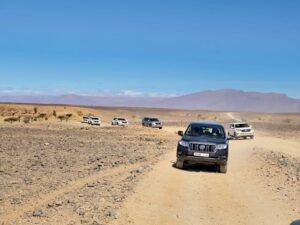 The journey from Marrakech to Agdz is one of Morocco’s most spectacular routes, transforming a simple transfer into an unforgettable adventure through the heart of the Atlas Mountains. This 265-kilometer journey takes you from the bustling souks and riads of Marrakech into the serene desert landscapes that mark the gateway to the legendary Draa Valley and the Sahara Desert beyond.
Choosing the right transportation for this route can make or break your Moroccan experience. While several options exist—from cramped shared taxis to infrequent public buses—a private transfer from Marrakech to Agdz offers the perfect balance of comfort, flexibility, and value that transforms this necessary journey into one of the highlights of your trip.
In this comprehensive guide, we’ll explore everything you need to know about booking an affordable private transfer from Marrakech to Agdz. Whether you’re a couple seeking a romantic desert escape, a family planning a Sahara adventure, or a group of friends embarking on a Moroccan road trip, you’ll discover how to find reliable services, what to expect along the way, and how to maximize every moment of this remarkable journey.
We’ll compare all available transportation options, break down realistic costs, reveal insider tips from experienced travelers, and provide actionable advice for booking the perfect private car transfer from Marrakech to Agdz that matches your budget and travel style. By the end of this guide, you’ll understand why thousands of travelers choose private transfers for this route and how you can secure the best possible experience for your journey through the Atlas Mountains.
Complete Overview: 3 Ways to Travel from Marrakech to Agdz
Understanding your transportation options is the first critical step in planning your journey from Marrakech to Agdz. Each method offers distinct advantages and disadvantages, and the « best » choice depends entirely on your priorities, budget, group size, and travel style.
Transportation Options Compared
The three primary ways to travel from Marrakech to Agdz represent a spectrum from budget-conscious to comfort-focused approaches. A private transfer from Marrakech to Agdz sits at the premium end, offering door-to-door service, flexible departure times, and the freedom to stop at incredible sights like Ait Ben Haddou. Shared taxis and shuttles occupy the middle ground, providing some cost savings while maintaining reasonable comfort. Public buses represent the most economical option but come with significant compromises in flexibility and comfort.
Private transfers utilize dedicated vehicles with professional drivers who know the route intimately. You’ll travel in a modern, air-conditioned vehicle with just your group, departing exactly when you choose and stopping wherever your interests lead you. The journey becomes as valuable as the destination itself, with opportunities to explore UNESCO World Heritage sites, photograph dramatic mountain landscapes, and experience authentic Berber culture at roadside cooperatives.
Shared taxis and shuttles operate on more rigid schedules but offer considerable savings for solo travelers or those on tight budgets. These services typically use minivans or larger vehicles, picking up passengers from various Marrakech hotels before heading toward Agdz. While you’ll save money, you’ll sacrifice the flexibility to linger at Ait Ben Haddou or explore spontaneous photo opportunities along the route.
Public buses through CTM or Supratours provide the most economical option, with fares around €10-12 per person. However, these services run on fixed schedules (often just once or twice daily), make no allowances for sightseeing, and require you to navigate to and from bus stations with your luggage. The journey also takes longer due to scheduled stops and the indirect routes these buses sometimes follow.
| Transportation Method | Cost Range | Duration | Flexibility | Comfort Level | Best For |
|---|---|---|---|---|---|
| Private Transfer | €170-190 total | 5-6 hours | Excellent | High | Groups, families, comfort seekers |
| Shared Shuttle | €20-35 per person | 6-7 hours | Limited | Moderate | Social travelers, moderate budgets |
| Grand Taxi (Shared) | €15-25 per person | 5-6 hours | Very Limited | Low | Extreme budget, adventurous types |
| Public Bus (CTM) | €10-12 per person | 6-7 hours | None | Moderate | Solo budget travelers |
| Rental Car | €50-90+ total | 5-6 hours | Excellent | Variable | Experienced drivers, extended trips |
Which Option Is Right for You?
Determining the ideal transportation method requires honest assessment of your priorities and circumstances. Let’s explore different traveler profiles to help you identify which option aligns best with your needs.
Solo travelers on tight budgets often gravitate toward public buses or shared transportation options. If you’re backpacking through Morocco with limited funds and flexible time, the CTM bus from Marrakech to Agdz makes financial sense. However, even solo travelers should consider that a private transfer, while more expensive upfront, offers exponentially more value in terms of experience, photography opportunities, and the ability to explore Ait Ben Haddou properly. Many solo travelers find sharing a private transfer with other travelers they meet in Marrakech hostels or through online forums, effectively creating their own affordable group rate.
Couples seeking comfort and memorable experiences consistently rate private transfers as worth every dirham. The ability to travel at your own pace, stop for sunset photos at mountain viewpoints, and spend adequate time exploring the legendary kasbah of Ait Ben Haddou transforms the journey into a romantic adventure. When you factor in the stress-free nature of door-to-door service and the intimate atmosphere of having your own vehicle, couples find that private door-to-door transfer Marrakech to Agdz services deliver exceptional value.
Families with children should almost always choose private transfers for this route. The flexibility to accommodate bathroom breaks, snack stops, and energy-burning pauses proves invaluable with young travelers. Children can nap comfortably, parents can adjust the schedule based on real-time needs, and the spacious vehicle can accommodate strollers, car seats, and the inevitable excess luggage that family travel requires. The ability to control the environment—music volume, air conditioning, rest frequency—makes the significant difference between a pleasant journey and a stressful ordeal.
Groups of friends or extended families find private transfers to be surprisingly economical. When you’re traveling with four or more people, the per-person cost of a private minivan often rivals or even undercuts shared shuttle services, while delivering infinitely superior comfort and flexibility. A group of six splitting a €120 private transfer pays just €20 each—competitive with shared options but with the added benefit of traveling exclusively with people you know and setting your own itinerary.
Photography enthusiasts and adventure seekers should not even consider alternatives to private transfers. The journey from Marrakech to Agdz presents some of Morocco’s most photogenic landscapes, from the dramatic switchbacks of Tizi n’Tichka Pass to the golden light illuminating ancient kasbahs. A private driver who understands your passion for photography will happily stop at optimal viewpoints, wait while you set up shots, and even recommend lesser-known perspectives that tour buses barrel past. This route is particularly stunning for landscape and cultural photography, making the flexibility of a Marrakech to Agdz private SUV or 4×4 absolutely essential for serious photographers.
Time-sensitive travelers with packed itineraries benefit enormously from the efficiency of private transfers. If you’re connecting to a desert tour departing from Agdz at a specific time, or if you need to return to Marrakech for an evening flight, the guaranteed departure time and direct routing of private transfers eliminates the anxiety of shared services that might run late due to other passengers or buses that operate on their own schedule regardless of your needs.
Why Choose an Affordable Private Transfer from Marrakech to Agdz?
The decision to book a private transfer from Marrakech to Agdz goes far beyond simple transportation logistics. This choice fundamentally shapes your experience of one of Morocco’s most spectacular journeys and can mean the difference between viewing this transfer as a tedious necessity versus embracing it as a highlight of your trip.
The Case for Private Car Services
Private transfers have become the gold standard for the Marrakech to Agdz route, and this preference isn’t driven by luxury expectations but rather by the practical realities of the journey and the unique opportunities it presents. Understanding the comprehensive advantages of safe and reliable transfer Marrakech to Agdz services helps justify the investment and reveals why budget-conscious travelers increasingly view this as money well spent rather than an extravagance.
Ultimate comfort on challenging mountain roads represents perhaps the most immediate and tangible benefit of private transfers. The route from Marrakech to Agdz crosses the High Atlas Mountains via the Tizi n’Tichka Pass, ascending to over 2,260 meters through dozens of hairpin turns and dramatic elevation changes. This isn’t a gentle highway cruise—it’s a genuine mountain crossing that can feel quite demanding, especially for passengers prone to motion sickness or those traveling with elderly family members or young children.
In a private vehicle, you control your comfort. The driver adjusts speed for your comfort level, you can request stops if someone feels queasy, and you’re not subjected to the aggressive driving style that shared taxis often employ to maximize their daily runs. Modern private transfer vehicles come equipped with functioning air conditioning (critical during summer months), comfortable seating with adequate legroom, and suspension systems maintained for passenger comfort rather than maximum profitability. You can recline your seat, sleep if needed, and stretch out rather than cramming into a shared grand taxi where you might literally be touching strangers for five hours.
Complete flexibility with departure times and itinerary transforms the journey from a logistical checkbox into an experiential highlight. Public buses depart when their schedule dictates, typically once or twice daily, forcing you to structure your entire Marrakech departure around their timetable. Shared shuttles offer slightly more options but still operate on predetermined schedules that might not align with your accommodation checkout, your energy levels, or optimal conditions for the journey.
With a private driver Marrakech to Agdz, you decide everything. Prefer an early 7 AM departure to catch morning light on the mountains? Done. Want to sleep in and leave at 10 AM after a leisurely riad breakfast? No problem. Need to depart at noon because you’re arriving on a morning flight? Your driver will be waiting. This flexibility extends throughout the journey—if you discover that the lighting at Ait Ben Haddou is perfect and want to spend an extra hour photographing it, there’s no shared shuttle driver anxiously watching his watch or bus schedule to maintain.
Cost-effectiveness for groups becomes undeniable when you analyze per-person expenses. Solo travelers often perceive private transfers as expensive because they’re comparing the total vehicle cost (€80-150) against the individual bus fare (€10-12). However, Morocco is a highly social destination where travelers frequently connect, and the economics shift dramatically with even one additional person.
Consider this realistic scenario: A couple books an affordable private taxi Marrakech to Agdz for €100. That’s €50 per person. A comparable shared shuttle costs €30 per person (€60 total for the couple), so the private option represents only €40 more for the two of them combined—less than the cost of dinner—to gain complete control over timing, stops, and comfort. For a family of four, a €120 private minivan costs €30 per person, barely more than shared services but delivering exponentially more value. Groups of six to eight find that per-person private transfer costs often actually undercut shared options while providing an infinitely superior experience.
Door-to-door convenience eliminates multiple pain points that other transportation methods inflict. Public buses require you to navigate to the CTM station in Marrakech (often a taxi ride from your accommodation), arrive early to secure your seat and store luggage, then navigate from the Agdz bus stop to your hotel upon arrival. If you’re staying in a traditional riad in Marrakech’s medina, getting yourself and your luggage to the bus station becomes a mini-adventure involving narrow alleyways that vehicles can’t access.
A Marrakech to Agdz private SUV or 4×4 picks you up at your riad door. The driver likely knows your accommodation (most drivers have picked up passengers from every major riad in Marrakech dozens of times) and knows which nearby accessible point to meet you if your riad sits deep in the medina. Similarly, upon arrival in Agdz, the driver delivers you directly to your hotel entrance, helping with luggage and often providing helpful orientation information about the town. This door-to-door service is particularly valuable when traveling with elderly parents, young children, or significant luggage for an extended desert trip.
Generous luggage capacity for desert expeditions matters enormously for travelers heading into multi-day Sahara adventures. Desert trips require specific gear—warm layers for cold nights, lighter clothes for hot days, sleeping bag liners, cameras and photography equipment, and all your regular travel items. Public buses enforce strict luggage limits and charge for excess bags. Shared taxis struggle to accommodate four passengers with full backpacks or suitcases.
Private transfers, especially minivans or Marrakech to Agdz 4×4 transfer options, offer abundant space. Modern minivans comfortably hold six passengers plus significant luggage, while some can accommodate eight people with reasonable bags. Even sedan options provide generous trunk space, and drivers are accustomed to travelers with desert-bound gear. Many vehicles include roof racks for additional storage if needed, though this is rarely necessary with proper vehicle selection.
Safety and reliability on challenging mountain roads represents a critical consideration that travelers sometimes underestimate until experiencing the Tizi n’Tichka Pass firsthand. This isn’t a highway in the conventional sense—it’s a mountain crossing with sheer drop-offs, blind hairpin turns, and sections where the road clings to cliffsides with minimal barriers. Local traffic includes everything from modern cars to ancient trucks belching smoke, from tourists timidly navigating the curves to seasoned drivers passing aggressively on blind corners.
Professional private driver Marrakech to Agdz services employ drivers who run this route multiple times weekly, often several times per day during peak season. They know every curve, every blind spot, every section prone to rockfall, and every section where fog tends to materialize. They understand the driving culture, anticipate the erratic behavior of other road users, and maintain their vehicles specifically for mountain performance. Insurance coverage provides proper protection, and reputable companies require rest stops to prevent driver fatigue.
Compare this to attempting the drive yourself in a rental car when you’re unfamiliar with Moroccan driving culture, mountain road challenges, and the specific hazards of this route. Or consider the shared grand taxi driver who might be rushing to complete multiple runs in a day, potentially compromising safety for schedule. The peace of mind from professional drivers focused solely on safely delivering your group makes private transfers invaluable for risk-averse travelers and families.
Privacy and personal space transform long journeys from endurance tests into pleasant experiences. Five to six hours represents a substantial time investment, and the difference between spending that time in your own bubble versus pressed against strangers cannot be overstated. In your private vehicle, you can have genuine conversations without strangers listening, play your music, speak candidly with your driver about Moroccan culture and life, and simply relax without the social performance that shared spaces require.
Families with children especially appreciate this privacy. Parents can manage snacks and entertainment without concerning themselves with disturbing other passengers. Children can ask questions freely, complain about boredom without judgment, and even have minor meltdowns without the added stress of irritated fellow travelers. Couples can have intimate conversations, romantic moments appreciating scenery together, and the freedom to laugh loudly at private jokes without self-consciousness.
Private Transfer vs. Other Transportation Options
Making an informed decision requires understanding not just the abstract advantages of private transfers but how they compare directly to specific alternatives in real-world scenarios.
Private Transfer vs. Shared Shuttle/Taxi Services
Shared shuttle services have proliferated in Morocco as a middle-ground option, and they do serve a legitimate niche. These services typically use modern minivans, operating on fixed routes with predetermined departure times and limited flexibility for stops. Understanding when shared shuttles make sense versus when affordable private taxi Marrakech to Agdz services deliver better value helps optimize your decision.
Price differences represent the most obvious comparison point. Shared shuttles typically cost €20-35 per person for the Marrakech to Agdz route, while private transfers range from €80-150 total depending on vehicle type. For solo travelers, the economics favor shared services—€25 versus €80-100 for sole vehicle occupancy represents a meaningful difference. However, the crossover point arrives quickly: two travelers choosing shared shuttles pay €50-70 combined versus €80-120 for a private vehicle, meaning private transfers cost just €30-50 more total. For this modest premium, you gain departure time control, stop flexibility, comfort, and privacy.
Departure time flexibility reveals a critical limitation of shared services. Most shuttles operate one or two daily departures, typically mid-morning (9-10 AM). If this aligns with your schedule, perfect. But if you want to leave at 7 AM to maximize time in Agdz before your afternoon desert tour departure, or if you need an 11 AM pickup because you’re checking out of a riad that holds rooms until late morning, you’re out of luck with shared services. Private transfers accommodate your schedule completely, departing exactly when you specify and adjusting if circumstances change.
Stop policies reveal fundamental philosophical differences. Shared shuttles typically make one predetermined stop, usually at Ait Ben Haddou for exactly one hour. This rigid schedule means you can’t explore at your own pace, can’t skip the stop if you’re not interested (saving time for later activities), and certainly can’t add stops for panoramic viewpoints, local cooperatives, or spontaneous photography opportunities. The journey follows the service’s priorities rather than yours.
Private transfers invert this dynamic entirely. You direct the itinerary. Most services include reasonable stops at no additional charge—bathroom breaks every 1.5-2 hours, photo stops at scenic viewpoints, and adequate time at Ait Ben Haddou (typically 1-2 hours). Want to skip Ait Ben Haddou entirely to save time? Your choice. Want to add a stop at an argan cooperative to learn about traditional production? Just ask. Want to visit the Atlas Film Studios in Ouarzazate? The driver will happily include it. This flexibility alone often justifies the modest price premium for many travelers.
Comfort and space considerations impact your experience significantly over five to six hours. Shared shuttles pack seven to eight passengers into minivans designed for comfortable seating of six. While not quite as cramped as public buses, you’re still sharing close quarters with strangers, negotiating space for bags, and potentially sitting in less desirable seats if you’re the last pickup. Private vehicles give you and your group the entire space—sprawl across multiple seats if you’re a couple in a minivan, ensure kids have adequate room, and store luggage without Tetris-like arrangements.
Best-case scenario for shared shuttles: Solo travelers or pairs with tight budgets, relatively rigid schedules, no strong interest in extended exploration of Ait Ben Haddou, and comfort with shared spaces would find shuttles adequate. Travelers who view the journey purely as necessary transportation rather than part of the experience might save money with shared services.
Best-case scenario for private transfers: Groups of three or more, photographers, families, travelers who value flexibility and comfort, those connecting to specific departure times, and anyone who recognizes that the journey itself offers as much value as the destination should choose private transfers without hesitation.
Private Transfer vs. Rental Car Self-Drive
Renting a car and driving yourself from Marrakech to Agdz represents a viable option that some travelers seriously consider, particularly those who value absolute independence or plan extended exploration with multiple stops over several days. However, this option introduces complexities and challenges that deserve careful examination before committing.
Driving challenges on Moroccan mountain roads should not be underestimated, especially by travelers accustomed to different driving cultures. The Tizi n’Tichka Pass features dozens of tight hairpin turns with minimal shoulders, sections where the road surface deteriorates, and challenging visibility conditions around blind curves. Moroccan driving culture embraces a more… assertive approach than many Western countries, with frequent passing on curves, minimal turn signal usage, and an expectation that slower vehicles will move aside to allow faster traffic through.
Add to these factors the presence of livestock occasionally wandering across the road, trucks carrying precarious loads that shed debris, and motorcycles weaving unpredictably through traffic. Fog can materialize rapidly at altitude, and during winter months, ice or snow becomes possible above 2,000 meters. If you’re already fatigued from exploring Marrakech or adjusting to jet lag, attempting this challenging drive might be more stressful than pleasurable.
Navigation and language barriers complicate matters further. While GPS systems function in Morocco, cell coverage becomes spotty in mountain sections, potentially disrupting navigation apps exactly when you need them most. Road signage uses Arabic and French, with town names sometimes spelled phonetically in ways that don’t match your English GPS data. Asking for directions becomes challenging if you don’t speak Arabic, Berber, or French, and many mountain villages have residents with limited tourism experience who might not understand your questions.
Insurance and liability concerns require thorough investigation before renting. Moroccan rental car insurance can be opaque, with coverage gaps that surprise travelers accustomed to comprehensive Western rental insurance. Confirm exactly what’s covered in case of accidents, what your deductible amounts to, and whether mountain roads have specific exclusions. International driver’s licenses are recommended though not always strictly enforced. In case of accidents on remote mountain roads, dealing with police reports, insurance claims, and potential vehicle damage becomes exponentially more complicated than simply being a passenger in a professionally operated transfer.
Fuel, tolls, and hidden costs add up quickly. Budget €25-30 for fuel for a round trip, though larger vehicles or those with poor fuel economy cost more. While tolls on this specific route are minimal, parking fees at Ait Ben Haddou and potential « guardian » fees (unofficial but persistent requests to watch your car) add small additional costs. More significantly, if you’re renting the car specifically for this journey rather than as part of a longer self-drive itinerary, the rental cost, fuel, and insurance might rival or exceed a private transfer cost, but without the benefit of local expertise and stress-free driving.
Parking in Agdz and security concerns present practical challenges. Finding secure parking for a rental car in Agdz, particularly if you’re staying in a traditional accommodation rather than a modern hotel, can be difficult. Many riads and guesthouses lack parking facilities, leaving you to find street parking and worry about vehicle security for the duration of your stay. If you’re continuing to desert destinations like Zagora or M’hamid that require leaving your car for overnight desert camps, security becomes an even greater concern.
When self-driving makes sense: Experienced mountain drivers who genuinely enjoy challenging driving, travelers planning extended stays with multiple stops over several days, groups that want to explore remote areas inaccessible to standard transfer vehicles, and those with specific interests (like searching for particular bird species or geological formations) that require extensive off-route exploration might find rental cars worthwhile. Budget at least €50-90 for a single day’s rental including fuel and insurance—at which point groups often find that private car transfer Marrakech to Agdz services deliver comparable or better value with zero stress.
When private transfers make more sense: Everyone else. Unless you have compelling reasons to drive yourself, the combination of stress elimination, local expertise, opportunity to enjoy scenery rather than focus on the road, and the ability to work, relax, or photograph during the journey makes private transfers objectively superior for most travelers.
Private Transfer vs. Public Bus (CTM/Supratours)
Public bus services through CTM (Compagnie de Transports Marocains) or Supratours represent Morocco’s official inter-city transportation network, offering the most economical option for budget-conscious solo travelers willing to sacrifice flexibility and comfort for significant cost savings.
Schedule limitations frustrate travelers accustomed to more frequent service. The Marrakech to Agdz route typically sees just one or two daily departures, usually in the morning and possibly another in the afternoon or evening. This inflexibility forces your entire Marrakech departure schedule around the bus timetable. If the bus leaves at 8 AM, you must check out of your accommodation by 7 AM or earlier, navigate to the CTM station in time, and commit to that specific departure regardless of whether you’d prefer to sleep in, enjoy a leisurely breakfast, or wait for better lighting conditions for the mountain crossing.
Return journeys present even greater challenges. CTM buses from Agdz to Marrakech maintain similarly limited schedules, meaning your departure from Agdz must align with whenever the bus happens to run that day. This can conflict with desert tour return times, force you to spend an extra night in Agdz when you’d prefer to return to Marrakech, or cause you to rush back earlier than ideal to catch the bus. Travelers with flight connections face legitimate stress about whether bus delays might cause them to miss their departures.
No sightseeing stops permitted represents perhaps the most significant limitation for travelers interested in experiencing the journey. CTM buses stop where their schedule dictates—typically for bathroom breaks and meal stops at designated restaurants (often mediocre tourist establishments that pay commissions). You cannot stop at Ait Ben Haddou for personal exploration. You cannot pause for photographs at dramatic mountain viewpoints. You cannot visit cooperatives or interact with local communities at roadside villages.
This transforms the journey from potential highlight to simple transport. You’ll see spectacular landscapes through the bus window but experience them only passively. The UNESCO World Heritage Site of Ait Ben Haddou, which most travelers rank among their Moroccan highlights, becomes merely something you glimpse from the highway. For photographers, culture enthusiasts, or anyone who values experiential travel, this represents a massive compromise that saves perhaps €70-90 while eliminating opportunities worth far more than that modest sum.
Luggage restrictions and handling concerns create practical difficulties, especially for travelers heading to desert destinations with camping gear. CTM enforces baggage limits—typically one checked bag and one carry-on. Excess bags incur fees, and you’re responsible for loading and retrieving your own luggage at each stop. If you’re traveling with camera equipment, camping gear, or simply the normal amount of luggage for an extended trip, these restrictions become burdensome.
Additionally, luggage rides in undercarriage compartments where you can’t monitor it, and bags occasionally go missing or end up on wrong buses when vehicles make multiple stops. While outright theft is rare, the anxiety of not having visual contact with your belongings for six hours on mountain roads adds stress that private transfers completely eliminate.
Comfort level on long journeys varies dramatically based on which bus you board. Newer CTM buses feature reclining seats, air conditioning, and functioning bathrooms. Older vehicles might have broken AC, cramped seating, and questionable bathroom facilities. You discover which bus you’ve drawn only upon boarding, creating an element of lottery that private transfers eliminate entirely. Even on good buses, six to seven hours in a full coach without the ability to stretch properly, control temperature, or adjust position frequently grows tiresome.
Price savings come with hidden costs beyond the obvious comfort and flexibility trade-offs. The €10-12 bus fare represents the lowest transportation cost for this route, but consider the complete picture: you’ll likely need a taxi from your riad to the CTM station (€2-5), possibly another taxi from the Agdz bus stop to your hotel (€2-5), and you’ll spend your entire journey seated rather than exploring. You’ll miss Ait Ben Haddou entirely unless you plan a separate trip there. You’ll arrive in Agdz more fatigued from the cramped journey and have fewer memorable experiences from the travel day.
Best for extreme budget travelers: Solo backpackers on absolute shoestring budgets who view transportation purely as getting from A to B, who have completely flexible schedules that can adapt to bus timetables, who don’t prioritize photography or cultural stops, and who find value in connecting with other budget travelers on public transport might find CTM buses adequate. Even then, many budget travelers who’ve experienced both options report that the modest extra cost of shared shuttles (€20-35) delivers worthwhile value over public buses.
Recommendation: Unless your budget genuinely cannot stretch beyond the €10-12 bus fare, explore alternatives. Even budget-conscious travelers usually find that splurging for a safe and reliable transfer Marrakech to Agdz enhances their overall Moroccan experience so dramatically that the investment pays dividends in memories and satisfaction.
Private Transfer vs. Grand Taxi Shared Service
Grand taxis represent Morocco’s unofficial but widespread inter-city transport system, offering a uniquely local experience that falls somewhere between private transfers and public buses in terms of cost and comfort. Understanding how this quintessentially Moroccan option works helps determine whether it might suit your circumstances.
How grand taxis operate differs fundamentally from Western transportation concepts. These large Mercedes sedans (typically 1970s-1980s models that have somehow survived decades of punishing use) congregate at designated departure points, waiting to fill with six passengers before departing. Yes, six passengers in a vehicle designed for five people maximum. The front seat holds three people squished together, while the back seat crams another three shoulder-to-shoulder. It’s intimate, to put it generously.
Pricing and negotiation challenges add complexity. The « official » shared grand taxi rate hovers around €15-25 per person, but arriving at this price requires negotiation skills and knowledge of fair rates. Drivers often quote inflated prices to tourists, and if you appear uncertain or desperate, you’ll pay more. Additionally, if the taxi doesn’t fill with six passengers within a reasonable time, you face choices: wait indefinitely, pay for empty seats, or try a different vehicle. This unpredictability frustrates travelers on schedules.
Private hire of a grand taxi—essentially converting it into a budget private transfer—typically costs €50-80, significantly less than official private taxi Marrakech to Agdz services but still considerably more than the per-person shared rate. However, private grand taxis come with significant drawbacks compared to proper transfer services.
Vehicle condition variability ranges from « surprisingly acceptable » to « legitimately concerning. » These vehicles have accumulated hundreds of thousands of kilometers over decades. Air conditioning might work or might not. Seat belts might exist or might have vanished long ago. Tires might be properly maintained or might be concerning. Some grand taxi drivers take pride in maintaining their vehicles well, while others operate on the barest edge of roadworthiness.
Comfort-wise, even in good condition, grand taxis offer spartan accommodations. Suspension systems developed for 1970s standards don’t cushion mountain roads effectively. Windows might not open fully. The interior likely shows decades of wear. Luggage space is severely limited—bags typically go on the roof rack, where they accumulate dust and risk damage on rough roads. For short urban trips, grand taxis are tolerable and culturally authentic. For five to six hours through mountain passes, they become genuinely uncomfortable.
When grand taxis make sense: Adventurous travelers seeking authentic local experiences, those who genuinely can’t afford €30-40 more for a proper transfer, and travelers who love the chaos and unpredictability of local transport might find grand taxis acceptable. Solo travelers meeting other solo travelers at hostels sometimes form ad-hoc groups to share private grand taxi costs, creating a budget-friendly quasi-private experience.
When to absolutely avoid grand taxis: Families with children (cramming kids into overcrowded vehicles for hours is miserable), elderly travelers (comfort and safety concerns), anyone with motion sickness (rough rides on winding roads amplify nausea), and travelers with significant luggage should avoid shared grand taxis entirely. Even for budget travelers, the modest savings over shared shuttles (€15-25 vs. €20-35) rarely justifies the substantial comfort downgrade.
Bottom line: Grand taxis serve a purpose in Moroccan transportation culture, but for the specific Marrakech to Agdz route—a long, mountainous journey where comfort significantly impacts experience—they represent a compromise too far for most travelers. The €30-50 difference between grand taxi costs and legitimate Marrakech to Agdz transportation services buys exponentially more comfort, safety, and peace of mind than that price difference suggests.
Real Cost-Benefit Analysis
Moving beyond abstract advantages to concrete financial analysis helps travelers make informed decisions aligned with their budgets and priorities. Let’s examine realistic scenarios across different traveler profiles.
Solo traveler scenario presents the most challenging economic picture for private transfers. A solo traveler faces the full vehicle cost alone—typically €150-170 depending on vehicle type. Compare this to:
- CTM bus: €15-20
- Shared shuttle: €30-35
- Shared grand taxi: €20-25
- Private grand taxi: €60-80
The price differential is undeniable. A budget-conscious solo traveler legitimately might choose shared options, accepting the limitations in exchange for savings of €50-100. However, consider the complete value picture: that €50-100 premium buys departure time flexibility worth substantial convenience, eliminates early morning stress navigating to bus stations, provides adequate time at Ait Ben Haddou (an experience worth the trip cost alone), delivers comfortable door-to-door service, and transforms a potentially tedious travel day into a memorable highlight.
Many solo travelers find creative solutions. Posting in Morocco travel Facebook groups or hostel notice boards often surfaces other solo travelers heading the same direction on similar dates. Forming ad-hoc groups of three to four solo travelers transforms the economics dramatically—each person pays just €25-35 for a private transfer, barely more than shared shuttle costs but with all the advantages of private service.
Couple traveling together finds far more favorable economics. A couple paying €170 for a private transfer invests €50 each. Comparable shared shuttles cost €75-80 per person (€60-80 combined), meaning the private option represents only €40-50 more total. For many couples, €40-50 represents less than a single nice dinner. In exchange for the equivalent cost of one meal, they gain:
- Complete control over departure time
- Flexible stops including adequate time at Ait Ben Haddou
- Romantic privacy in their own vehicle
- Door-to-door convenience eliminating taxi logistics
- Comfort and space to relax together
- Freedom to adjust plans spontaneously
The value proposition becomes overwhelmingly favorable. Couples consistently rate private transfers among their best Moroccan expenditures, with the experience quality far exceeding the modest cost difference. This is particularly true for couples celebrating special occasions—honeymoons, anniversaries, or milestone birthdays—where the enhanced experience quality delivers memories worth far more than €40-50 in savings.
Family of four breakdown reveals private transfers as outright economical winners. A family paying €190 for a minivan invests €40 per person. Shared shuttles cost €35-40 per person (€190-200 total for the family), meaning private transfers cost the same or even slightly less while delivering:
- Elimination of stress managing children in shared public spaces
- Ability to accommodate bathroom breaks and snacks on children’s schedules
- Privacy for managing inevitable kid chaos without disturbing strangers
- Generous luggage space for all